Introducing VERSA by Klein
Automatic sliding doors aren’t just for supermarkets any more. A new generation is designed for the home: they open with a light push, a wave of the hand or a tap on your phone, and they’re quiet enough to use outside a bedroom at night.
If you’re planning a kitchen extension, reworking a narrow hallway or making a home easier for an older relative, here’s what you need to know – how they work, how safe they are, and what fitting one actually involves.
What is an automatic sliding door for the home?
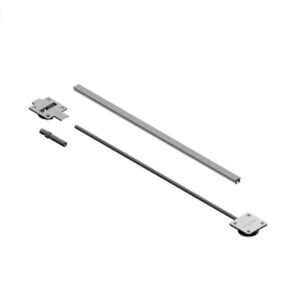
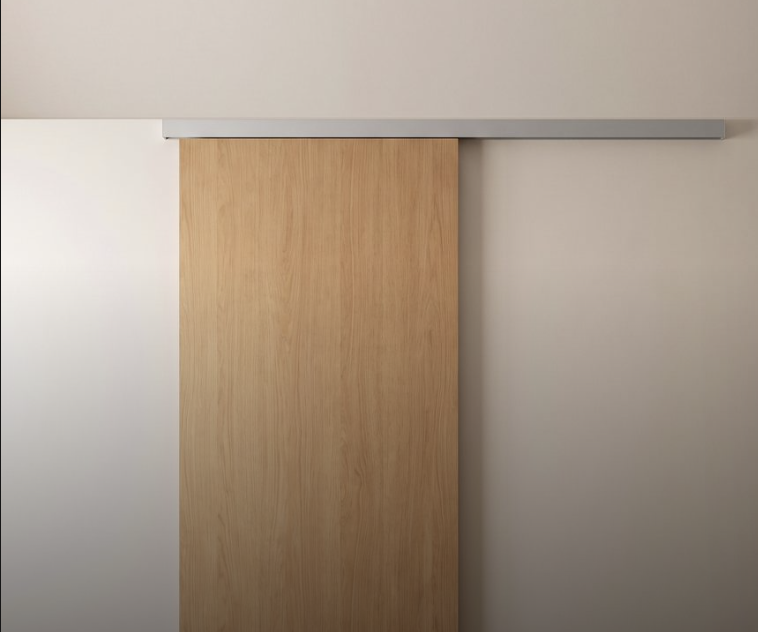
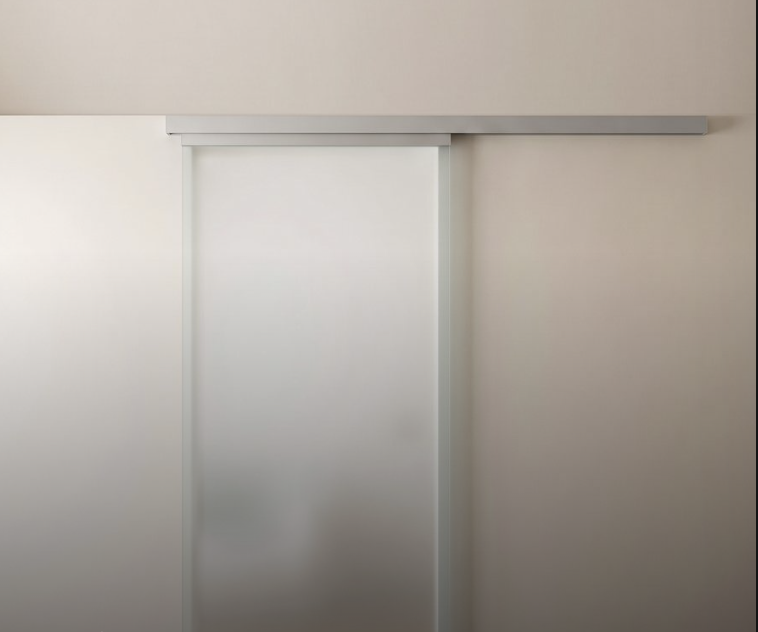
It looks exactly like an ordinary internal sliding door. The difference is hidden above it: a slim 45 mm aluminium track that holds the motor and electronics. The door panel hangs from that track just as it would on a manual system, and the motor glides it open and closed.
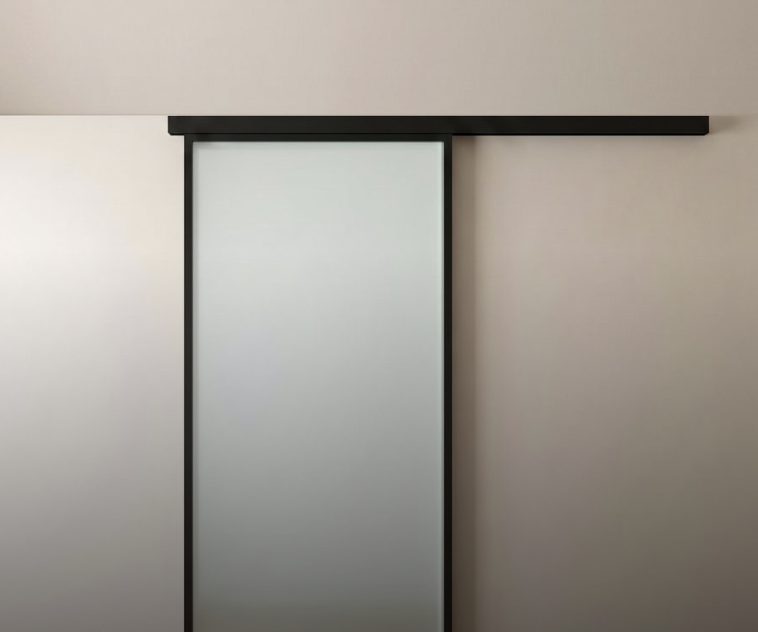
There’s no bulky box over the door and nothing bolted to the panel itself. You choose the door you want – solid wood, plain glass, or glass with a slim black frame – and the track comes in silver, black or (on request) white to suit your interior.
How do you open it?
Every door comes with two ways to open it as standard, and you can add others now or later.
- Push & Go (standard): give the closed door a light push and the motor takes over.
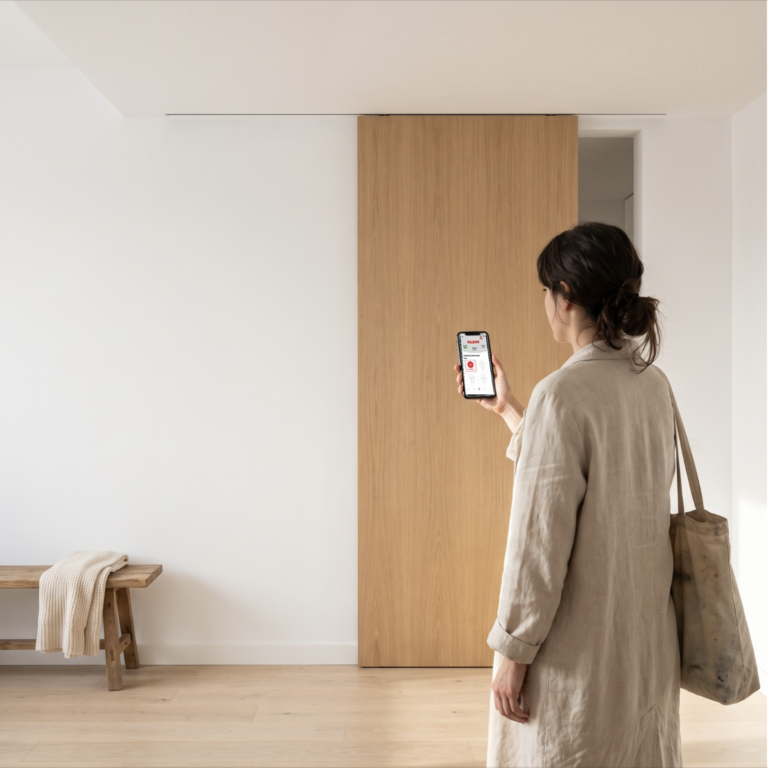
- The KLEIN app (standard): choose the mode from your phone – open, closed or exit only.
- Ceiling sensor (optional): the door opens as you walk up to it. Nobody has to touch anything.
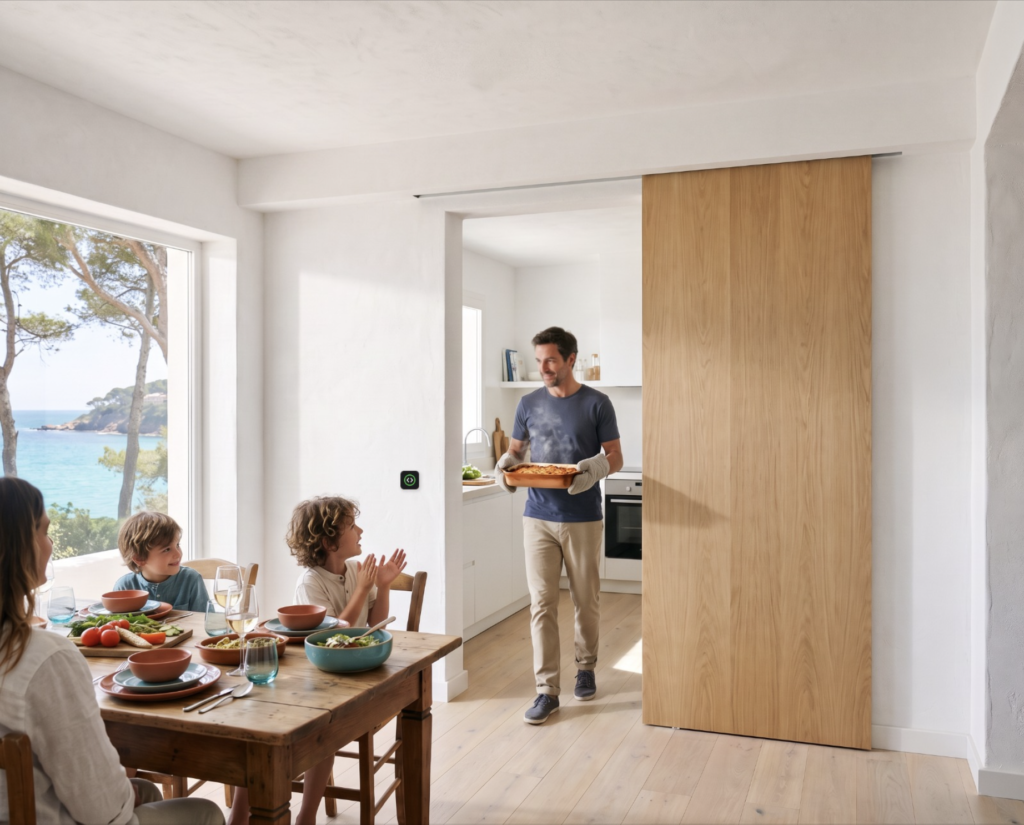
- Touch-free wall sensor (optional): hold your hand in front of it and the door opens. Handy with your hands full, or in a kitchen.
- Wireless push button (optional): connects over Bluetooth with no cables and can match your light switches.
- Remote control (optional): open or close the door from your sofa or bed.
There’s also a bathroom mode. Lock the door from the inside and it shows “occupied” on the outside – useful for an en-suite.
Is it safe for children and older people?
Yes – safety is built into how the door moves. It detects obstacles and anyone in its path, and stops. The pushing force is kept low, and you can adjust the opening and closing speed to suit your household.
The system is certified to EN 16005, the European safety standard for powered pedestrian doors, carries the CE mark, and has been tested over 500,000 opening cycles.
How quiet is it?
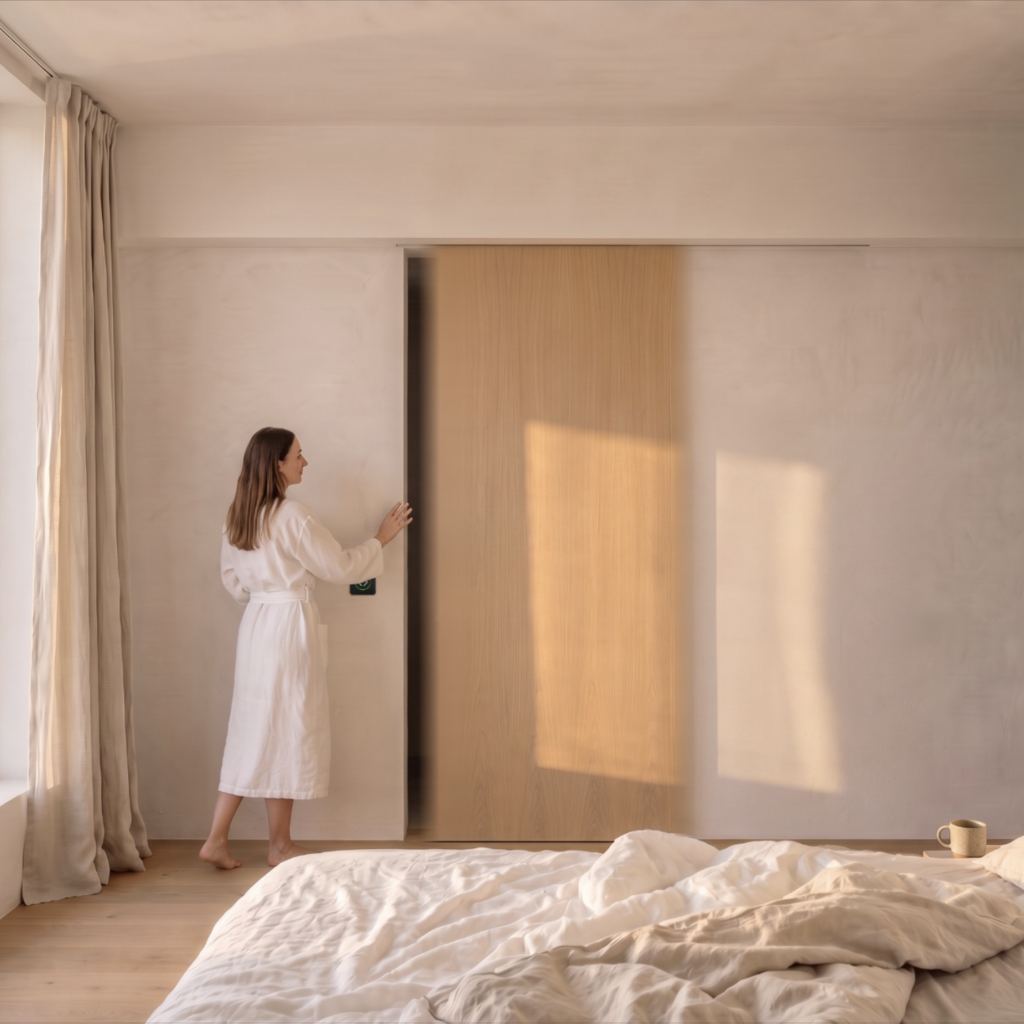
Very. Instead of belts and gears, the door uses a magnetic linear motor, and it runs at under 50 dB – roughly the level of a quiet library. You can walk through at night without waking anyone, which matters for bedrooms, nurseries and open-plan homes where sound carries.
It’s also frugal: around 2 W on standby, about the same as a phone charger left plugged in.
Can it be fitted in an existing UK home?
In most cases, yes. The track can be fixed to the wall, to the ceiling, or between stud partitions, so it suits everything from a Victorian terrace to a new-build extension.
A few practical points to check first:
- Door size: the panel needs to be between 870 and 1,330 mm wide and weigh 20–80 kg.
- Power: the door needs a mains supply nearby. As with any fixed electrical work, this should be done by a qualified electrician.
- Sensors and buttons: wired sensors need a low-voltage cable run to the control board – much like LED strip lighting in a wardrobe. If you’re renovating, decide on these before the walls are plastered. Wireless options can be added at any time.
- Space: like any sliding door, it needs clear wall space beside the opening for the panel to slide along.
The simplest approach is a short home visit, where an installer checks the opening and recommends the right mounting.
Solid wood
Wood, glass or framed: which door suits your room?
The automatic system stays the same – what changes is the door itself. Each style suits a different kind of space.
Solid wood
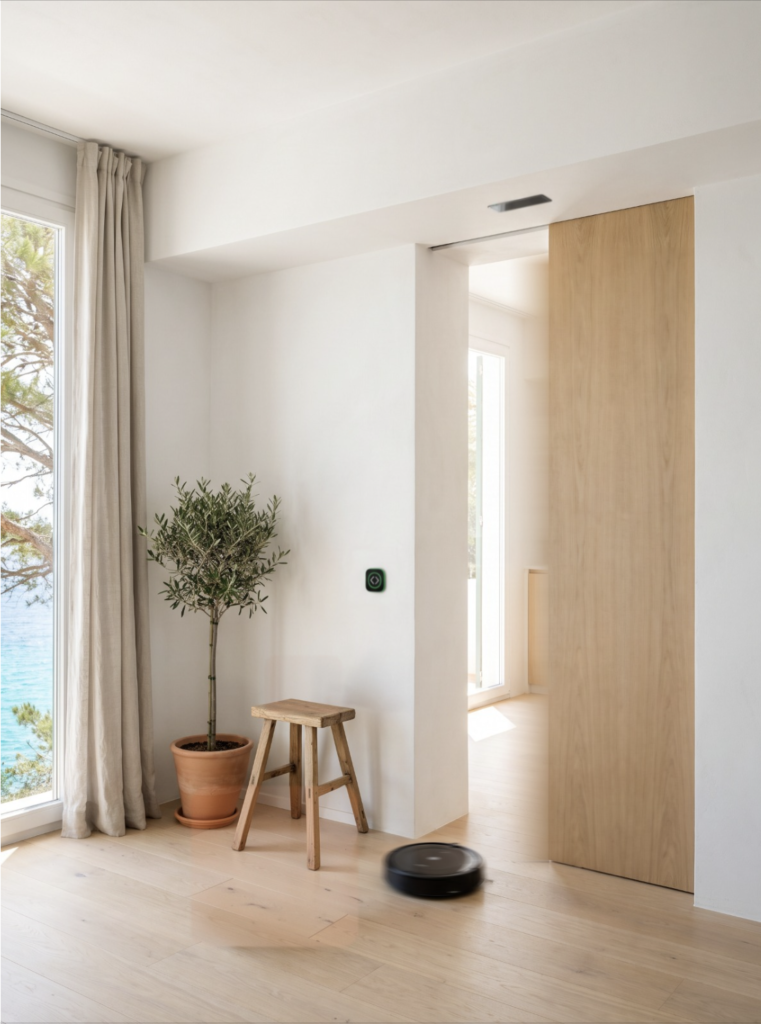
The choice for privacy. A wooden panel blocks sight and softens sound, so it works well for bedrooms, home offices and bathrooms. It can be painted or finished to match your other internal doors.
Plain glass
The choice for light. A glass panel lets daylight flow from one room to the next – perfect for a dark hallway or a kitchen extension you want to feel part of the living space. Frosted glass gives you light and privacy at the same time.
Glass with a slim black frame
The choice for character. A black-framed panel gives the industrial, Crittall-style look that’s popular in British homes right now, and it pairs especially well with kitchen extensions and period properties.
The finishing touch
The track above the door comes in silver or black, with white available on request. Pick the one that disappears into your ceiling, or the one that matches your handles and light fittings.
Plain glass
Glass with a slim black frame
So, is it worth it?
An automatic sliding door is worth considering if:
- you want to open up or divide a room without a door swinging into the space
- someone at home finds ordinary doors heavy or awkward
- you often walk through with your hands full – in a kitchen, utility room or hallway
- you want an en-suite door that locks and shows when it’s in use
If none of these apply, a good manual sliding door may be all you need. But if they do, the everyday difference is surprisingly large.